
Making change feel easy at the Queen Victoria Market Purpose Precinct
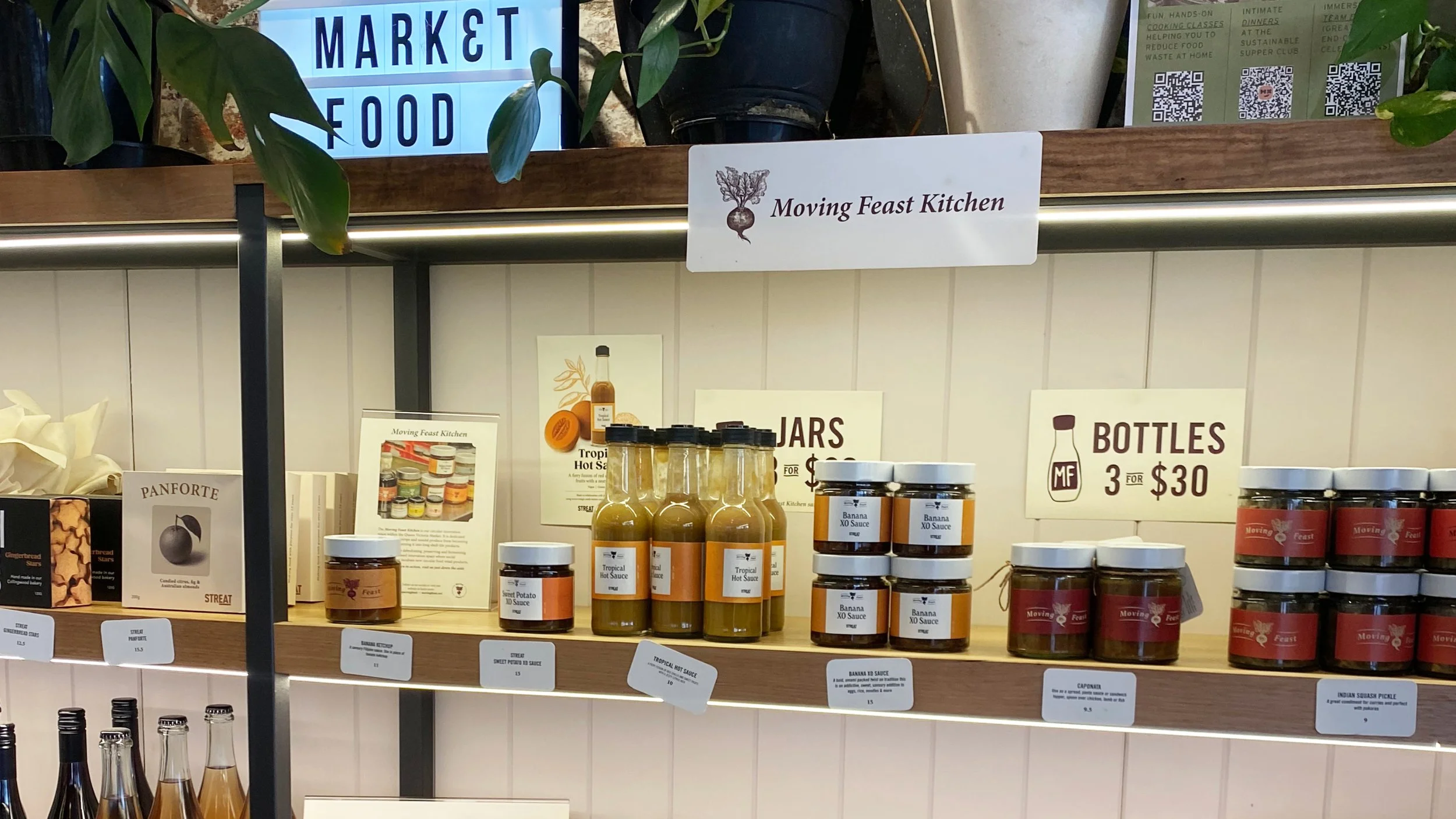
At the Queen Victoria Market, tucked between proud piles of heirloom tomatoes and rows of food trucks, sits something quietly radical: The Purpose Precinct. Australia’s first dedicated social-enterprise market precinct.
This large-scale system and behaviour change initiative was developed by social enterprises STREAT and Good Cycles, and is supported by the Social Enterprise Network of Victoria (SENVIC).
It’s a place where a 370kg glut of sweet potatoes becomes XO sauce, shoppers can support local social enterprises, and visitors learn to think a little slower, waste a little less and choose a little better.
We sat down with Fiona Meighan, STREAT eco-innovation lead and innovation director, to talk about what’s working, what didn’t and why small interventions can spark big shifts in the way Australians think about waste and food systems.
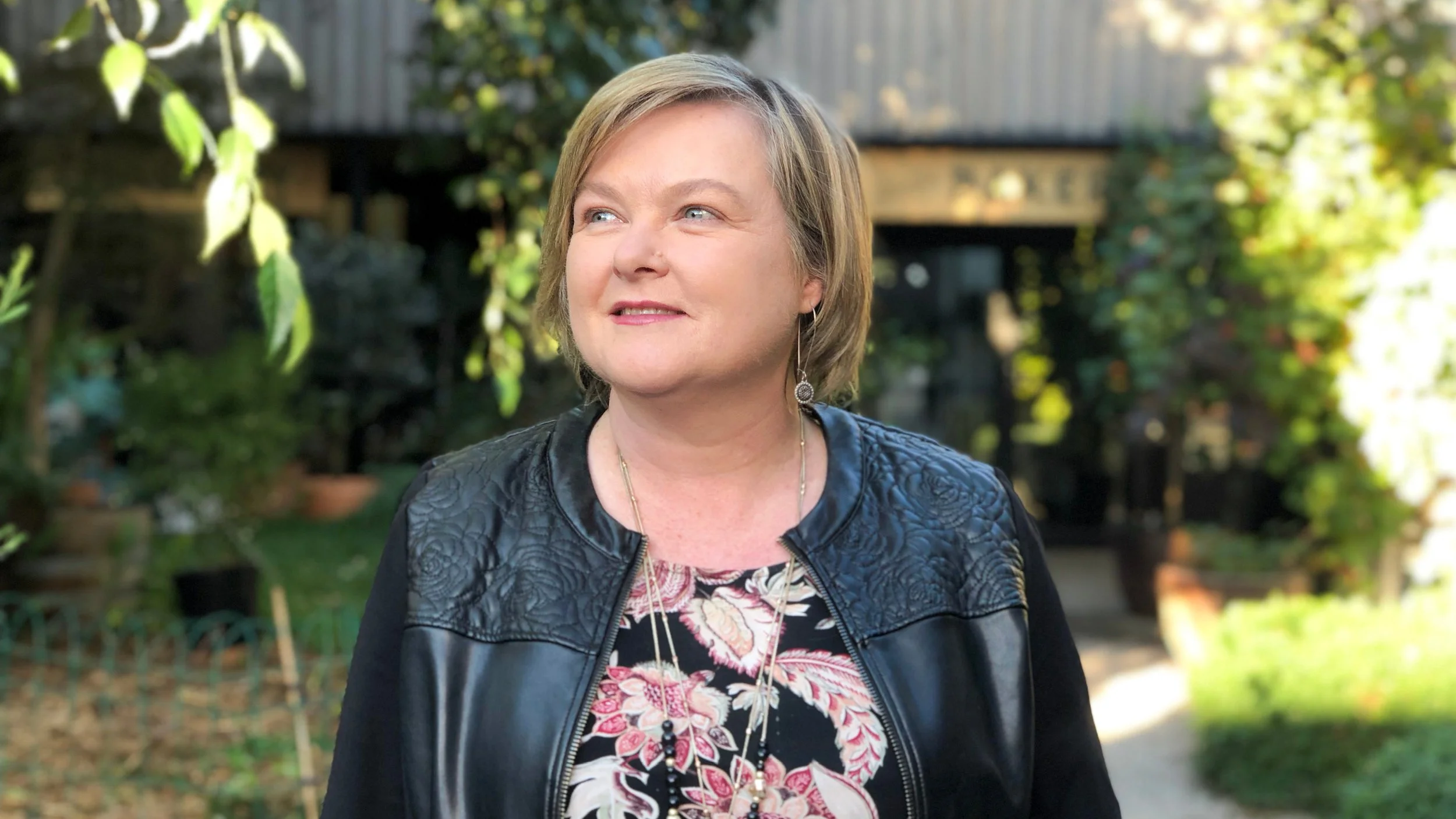
Fiona Meighan, STREAT eco-innovation lead and innovation director
Let’s start with the big picture. How did the Purpose Precinct come to be?
Fiona: Most people know STREAT for our youth training programs. But STREAT has always known that people and planet need to sit together. Back in 2017 and 2018, we created our first Planet Plan – it was a deep audit of our waste, energy, procurement, everything. That work helped frame the circular projects we’ve delivered since.
When the pandemic hit, we collaborated with other social enterprises on a project called Open Sauce, funded by Sustainability Victoria. It was all about rethinking “waste” as a resource.
Eventually that led us to setting up the Moving Feast kitchen at the market and turning oversupply from traders, like surplus fruit, vegetables and bread into jams, chutneys and other pantry ingredients.
The kitchen became a focal point for teaching, experimenting and engaging shoppers in how food should (and could) move through the world.
And that’s now all housed within the Purpose Precinct, alongside our STREAT café and two retail spaces supporting First Nations and local social enterprises. It’s Victoria’s only social enterprise marketplace.
The STREAT cafe shelves are full of small-batch products rescued from oversupply. What are you learning about shopper behaviour?
Fiona: We want to help people slow down, because 95% of the time we’re all just doing fast, automatic thinking. But a product made from surplus produce asks people to think consciously about seasonality, about supporting people and planet and about embracing variation.
We’re also learning that people don’t always buy for the reasons we think they’re buying.
When our sweet potato XO sauce sold well, we assumed it was because people bought into the mission. But its popularity was actually driven by being shellfish-free, plant-based and gluten-free.
We’ve learned some hard truths too. Our banana skin cookies were a (delicious) flop. And trying to tell their origin story made it worse – people wanted them even less after learning what they were made of, even though they tasted fabulous!
What’s your take on people like the XO sauce fans who love the product, but for reasons that are only loosely connected to purpose?
Fiona: By being honest about what actually motivates people.
Some customers care deeply about methane emissions. Others care about saving money, or dietary needs, or taste. All of those are legitimate entry points.
If someone buys something because it’s plant-based rather than rescued, that’s still a win. They’re still keeping food out of landfill, and afterwards we can tell the story of the impact they created.
That’s how you slowly shift people into what we call “deeper shades of green”.
We celebrate what they’re already doing, then gently invite them to take the next step.
What I love about the Purpose Precinct is that it’s so hands-on at a time when it feels everyone is hyped about digital. Was that intentional?
When you’re doing stuff with your hands, it creates an opportunity for liminal moments.
People can be very motivated in the moment, but motivation is fickle. If something’s too hard, if they’re tired or hungry, those good intentions disappear. That’s why skills matter. If someone leaves here with a new skill, even something small, that’s what sticks.
If someone is making stock from scraps or transforming plastic into a new object, they drop out of fast, automatic thinking into a different mental mode. It gives them a sense of capability. We see people who come to a class once and tell us months later, “I never thought I’d do this, and now it’s just part of my routine”.
In terms of our team, we’ve also noticed that if we pick the right champions, people with good energy who can model the behaviour, change spreads incredibly fast.
Let’s talk about the reuse trial at the Purpose Precinct, where forty-one thousand plates were saved from landfill over a three-month period.
Fiona: That trial was a highlight. We ran a reuse system across the food-truck forecourt at the market, offering reusable plates and separating organic waste for three months.
What it reinforced was one of the golden rules of behaviour change: if you make it easy, people will do the thing they already wish they were doing.
So many visitors told us that before the pandemic, they were all-in on reusable cups and containers…then fell out of the habit. They just needed a nudge and some convenience to get started again.
We’ve also run workshops on soft plastics, cardboard, food scraps, and thanks to a grant from the City of Melbourne, we, along with our partner MAKE Studios, now have a plastic extruder machine that turns waste bottle caps into pens and carabiners. When visitors crank the handle themselves, you can see the IKEA effect in real time. It’s a great teaching moment.
Tell me more about the IKEA effect?
Fiona: The IKEA effect is this idea that people value things they make themselves more than something similar they could buy ready-made.
And we really see that here. When someone turns the handle on the extruder machine and sees it turned into a pen or a carabiner, the penny drops. They’ve taken something previously worthless and made it into something of value.
What about people who aren’t already “green-minded”?
Fiona: We absolutely target the people who are almost there. People who want to do better but feel a bit unsure or overwhelmed.
So we don’t try to convert the unwilling, or focus on people who are already onboard. We focus on small wins for the people who are ready to move one step forward.
This mirrors what finance marketers struggle with: shifting behaviours in a category some people actively avoid thinking about, or feel intimidated by. What advice do you have for them?
Fiona: Start with something simple, like applying the EAST framework to your problem and see how that changes the solution you’re delivering. It’s incredibly useful for running small experiments.
Find believers inside the organisation and build with them.
Don’t cling to your own assumptions, but be willing to test them.
And, most importantly, watch what people do, not what they say.
If your behaviour-change intervention works for a reason other than the one you intended? Great. You’ve just learned something new, so go with it. Don’t fight human nature.
Small interventions can shift systems, because over time the ideas we’re sharing take root and drive big changes.
And finally, if a reader is interested in learning more about the Purpose Precinct and hearing about STREAT’s behaviour change interventions first-hand, can they visit?
Fiona: Absolutely. Come down and see us!
The Purpose Precinct is supported by revenue from team days, workshops, kitchen classes, sustainable suppers – we offer all sorts of bite-sized experiences focusing on behaviour change, circularity and innovation.
You can learn, experiment, eat well and get your hands dirty (in a good way).
If you visit on the weekend you can make your own pen or carabiner at our Loopy Lab and feel the IKEA effect for yourself.
We also make hampers at STREAT featuring our inhouse-made products that support people and planet. So if anyone wants their Christmas gifts to support a greater purpose this year, you know where to find us!