
When it comes to trust, the small stuff is the big stuff
Financial services have a trust problem. Not a small one, and not one that’s going to quietly go away.
Recent Roy Morgan data shows that trust is still being rebuilt, and not evenly. Some brands are clawing it back and others are still in the hole. Which means in 2026, trust isn’t a “brand thing”. It’s the whole game.
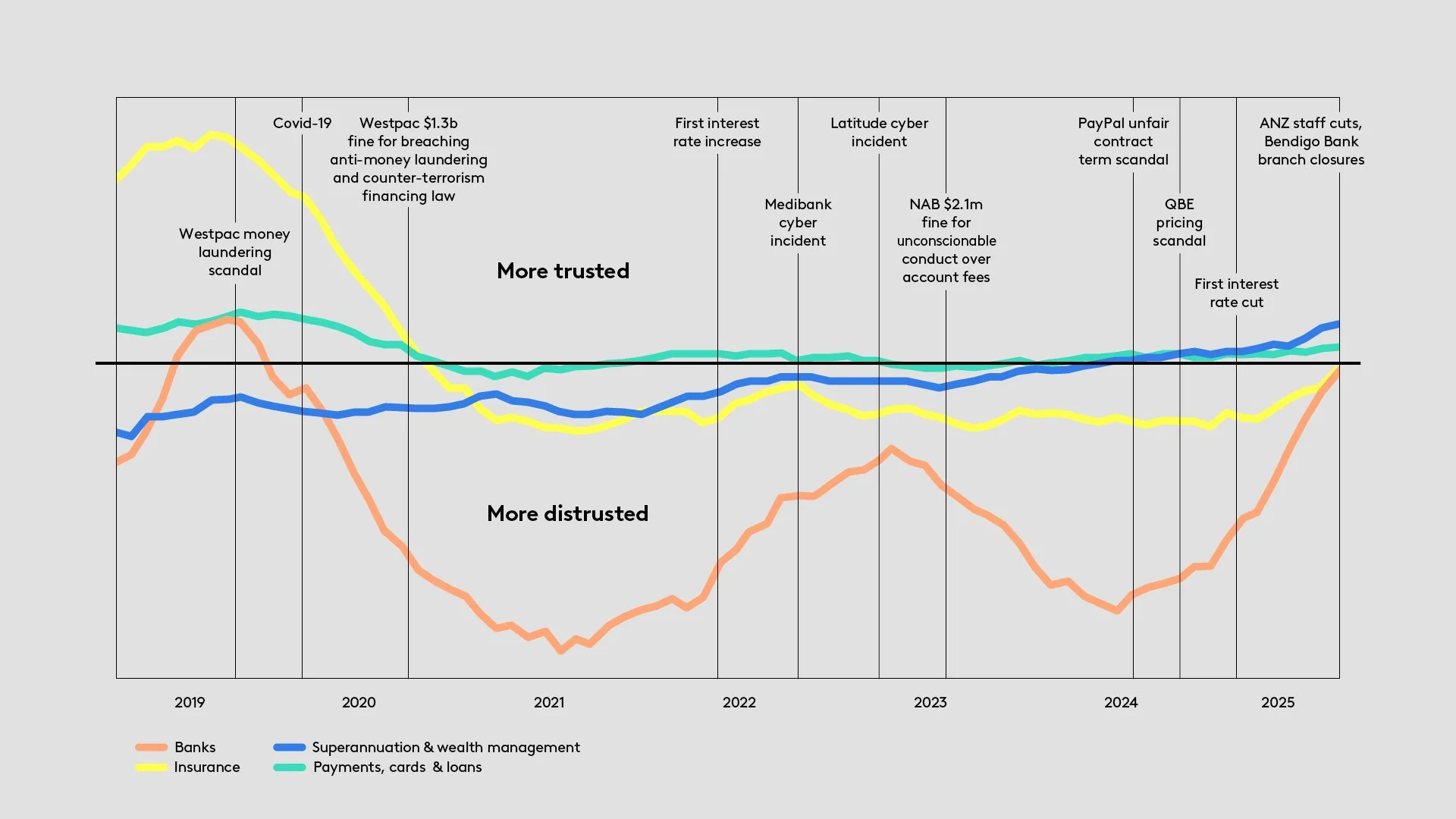
Base: Australians 14+, Latest 12-month average n= 20,562. Arrows and numbers represent ranking moves since Aug 2024.
Trust isn’t lost in one bad moment, it’s worn down by a hundred forgettable ones.
We’ve been on the receiving end of some clangers, like an onboarding email that read like it survived twelve rounds of stakeholder edits. Not to mention the irony of listening to 25 minutes of on-hold messages about my call being important before being abruptly cut off.
Small moments of failure or friction are rarely visible, and they’re unlikely to make a Board nervous, but together they shape how reliable your brand feels. Trust compounds in repetition. It is built when your customers’ expectations are met, clearly and consistently.
For marketers, this is where things get tricky.
Marketing shapes what the organisation says, but other teams shape how it behaves.
Look closely at your touchpoints and you’ll probably see something like this:
The digital team owns the onboarding flow
Operations controls administrative correspondence
A service provider manages system-generated emails
A contact centre leader writes call scripts
Education specialists design seminars and webinars
Customer care responds to complaints
A business development manager builds their own pitch deck.
That’s a lot of people with a lot of different ideas. If trust is on your agenda for 2026, here’s where to start:
Update your brand system
Dust off your templates, style guide and core assets and look at them with fresh eyes.
Are they clear, usable and consistent across channels, or is your brand playbook a theoretical masterpiece that no-one ever refers to?
If teams are reinventing layouts, adding clipart into PowerPoint templates or guessing at information hierarchy, your system is not protecting your brand.
Strengthen the tools people rely on every day, especially for those small moments where tapping marketing on the shoulder feels excessive.
Train teams on your tone of voice
If you want a cohesive brand voice, a PDF parked in SharePoint won’t get you there.
Pull real onboarding emails, hardship letters, claims responses and webinar scripts and get into a room with the people writing them. Rewrite a few live examples as a group. Show how to turn crimes against English like “in accordance with legislative requirements” into something a human might actually say.
Build a small, approved library of before-and-after examples that teams can reference when time is tight and the pressure is high.
Then, embed tone checks into your workflow. Add a simple “Does this sound like us?” check into briefs and signoffs.
Right now, the people with the most customer contact probably have the least brand context. Make tone training part of induction for service and operations teams, not just marketing, and offer regular upskilling.
Put practical guardrails in place
Brand guardrails aren’t about being the creativity police. They exist to protect brand consistency in the moments that matter most, and to make the right thing to do the easiest thing to do.
Create a central asset library that is genuinely easy to find and use. Keep it clean. Remove outdated templates and archive old logos properly so they are not sitting next to the current version like identical twins.
Apply clear naming conventions and dates. Add short notes directly in the folder or file name that explain what it is for and when to use it.
Finally, appoint an owner. Someone needs to maintain, update and quietly prune it or your stakeholders will go rogue.
Trust is built on a pattern, not a promise
Brand hygiene doesn’t get a lot of airtime. None of this behind-the-scenes work will win awards or trend on LinkedIn. But it will work to strengthen your brand every single day, which is far more useful.
Your customers may never consciously notice the improvement, but they will feel it. And feelings are what trust is made of.